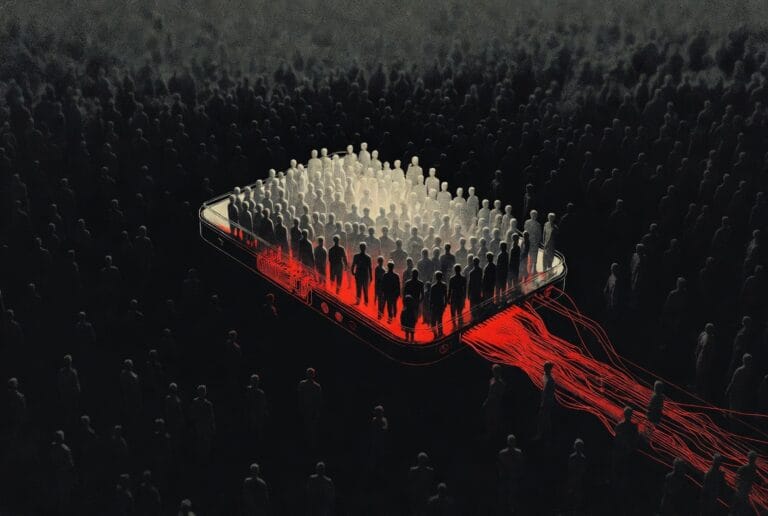
The US government now requires visa applicants to make their social media public.
Short answer
As of March 30, 2026, US nonimmigrant visa applicants (H-1B, J, F, K-1, T, U and others) must set all social media profiles to public before their interview. The DS-160 form requires listing every platform used in the past five years. For journalists, lawyers, and NGO workers, compliance means exposing source networks and professional contacts to a government vetting process.
What the policy actually says
The Department of State announcement, published March 25, 2026 and effective five days later, requires applicants for the following visa categories to adjust the privacy settings on all social media profiles to public or open before their visa interview: H-1B, H-4, F, M, J, K-1, K-2, K-3, R-1, R-2, A-3, G-5, H-3, Q, S, T, and U.
The instruction is not a request. It is a condition of the application process. Applicants who do not comply risk delays or refusal.
The DS-160 form, which is the standard nonimmigrant visa application, requires listing all social media platforms used in the past five years along with associated usernames.
This is not passive surveillance of what happens to be public. The government is actively instructing applicants to remove privacy protections they have previously chosen to apply.
Who this actually affects
The list of covered visa categories is broad enough to include most categories of professional travel to the United States.
A journalist on a J-1 exchange visa covering a story is covered. A lawyer attending a conference on an H-1B is covered. An NGO field worker entering on a T or U visa is covered. A researcher on an F visa is covered. A foreign national marrying a US citizen on a K-1 visa is covered.
For most of these people, their social media presence is also their professional identity. The accounts they are being told to make public contain their source networks, their professional contacts, their political reporting, their organizational affiliations, and in some cases information that could expose them to risk in their home country if made visible to a US government database that can be shared with other agencies.
The same exposure logic plays out daily in field operations, mapped in our digital privacy guide for NGO workers abroad. The visa interview is a single moment. The data the disclosure produces survives long after the interview ends.
What vetting actually looks at
The State Department’s stated purpose is identifying applicants who are inadmissible on national security or public safety grounds. The announcement is explicit: every visa adjudication is a national security decision.
Social media vetting in practice goes beyond what is posted. It includes who you follow. Who follows you. What organizations you are publicly affiliated with. What events you have attended or promoted. What positions you have expressed on political questions. What your network reveals about your associations.
For a journalist who covers national security or foreign policy, a researcher who works on sensitive topics, an NGO worker with contacts in regions of US geopolitical interest, the network itself is the data. Making accounts public does not just reveal your posts. It reveals your map.
The compartmentation problem this creates
The standard OPSEC response to social media exposure is separation. A professional account for public-facing work. A private account for sensitive contacts. Privacy settings applied deliberately. That architecture exists for a reason.
The downstream cost of a public profile is documented in how judges use Instagram against people in proceedings. The same mechanism applies once a US adjudicator, or a future requesting agency, has the same view.
This policy creates a direct conflict with that architecture. An applicant who has maintained a private account for operational reasons is now instructed to make it public as a condition of travel.
The alternatives are limited. Create a secondary account for the visa process and use it for the required disclosure, keeping the primary account private. But the DS-160 requires all accounts used in the past five years, and providing false or incomplete information on a US visa application carries serious consequences.
The honest answer for anyone with a sensitive professional profile is that this policy forces a choice between operational security and US entry. There is no clean solution. There is only a decision about which risk is more acceptable.
What other governments are watching
The United States is not the first country to screen social media as part of immigration vetting. But it is the largest, the most influential, and the one whose policy other governments watch most closely.
The UK has operated social media checks for certain visa categories since 2021. Australia has similar provisions. Canada is expanding its screening capabilities.
Each time a major democratic government normalizes social media exposure as a condition of entry, the next government to implement the same policy has an easier justification. The question is not only what the United States is doing in March 2026. It is what the field looks like in 2028 when the same logic has been applied in a dozen other jurisdictions, some of them significantly less constrained in how they use the information they collect.
Frequently asked questions
Does this apply to tourists visiting the United States?
No. The current expansion covers specific nonimmigrant visa categories as listed in the March 25, 2026 announcement. ESTA travelers from visa waiver countries are not currently subject to this mandatory disclosure requirement, though they have long been subject to social media screening as part of general vetting.
What happens if an applicant declines to make accounts public?
The announcement does not specify penalties explicitly, but the DS-160 requires complete and accurate disclosure of social media accounts. Incomplete disclosure is a ground for refusal. Making accounts private or failing to disclose them exposes the applicant to a finding of misrepresentation, which carries severe immigration consequences.
Does deleting accounts before applying solve the problem?
The DS-160 requires listing all accounts used in the past five years. Deleting an account does not remove it from the requirement. It may, however, reduce what is visible during the review period.
Does this affect dual nationals or US permanent residents?
US citizens and permanent residents do not apply for nonimmigrant visas, so the disclosure requirement does not apply to them in the same form. They remain subject to social media review at ports of entry under the broader CBP framework, which is a separate process. Dual nationals applying on a foreign passport are treated as nationals of that country for visa purposes and are subject to the disclosure if they hold one of the listed visa categories.
The line between operational deletion and obstruction is the same one that runs through other settings, mapped in our piece on deleting evidence versus protecting yourself. The visa case is structurally similar: the disclosure obligation precedes the cleanup, not the other way around.
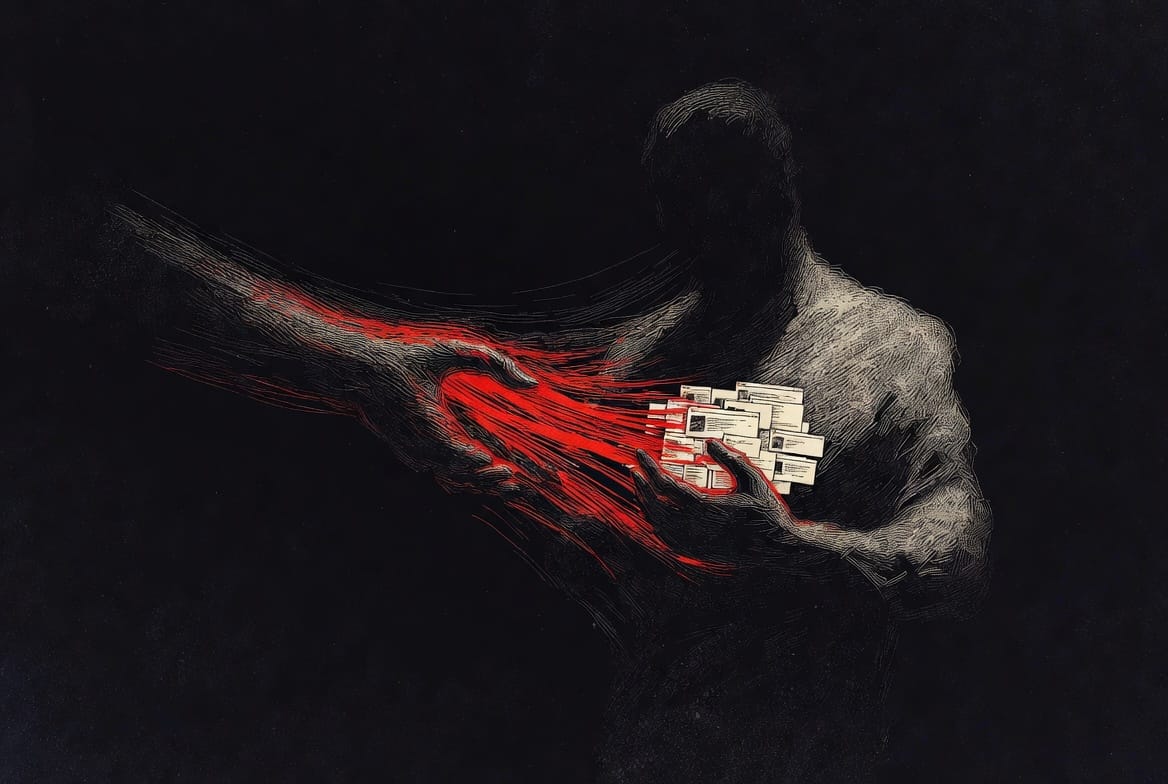
The US government did not ask to look at your public posts. It asked you to make your private ones public. Those are different requests with different implications. The first is surveillance. The second is compelled exposure.
There’s no perfect setup. Anyone selling you perfect is selling fear. The goal is simple: make yourself a harder target than the person next to you.